SAN FRANCISCO — Kindred, the global home swapping platform, has raised $125 million over two rounds to scale its growth as a community-driven travel alternative to hotels and short-term rentals.
The investment reflects growing momentum behind Kindred’s give-to-get model powering its next phase of growth as the product evolves from one home swapping community to a platform of interconnected sub-communities, enabling people to swap homes with friends-of-friends or existing trusted networks.
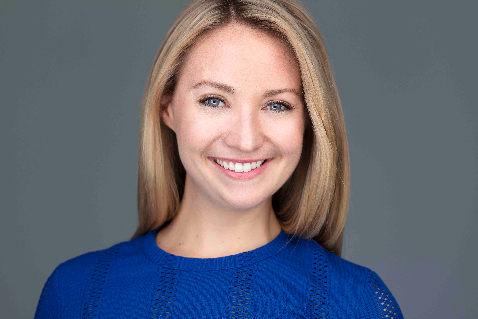
“Travel has long been dominated by two options: hotels and short-term rentals,” said Justine Palefsky, Co-Founder and CEO of Kindred. “Peer-to-peer home swapping is emerging as the third option, and it’s no longer niche. Our momentum signals that home swapping has become a global movement, and this funding allows us to build Kindred not just as a product, but as a social travel platform rooted in trust, generosity, and belonging.”
Founded in 2021, Kindred was built to make travel more accessible at a time when rising costs and housing pressures have reshaped how people move around the world. Today, the platform has grown to almost 300,000 members across 150+ cities, adding 150,000 members in 2025 alone, with almost 350,000 nights hosted to date. Top destinations on the platform include New York City, London, Los Angeles, Barcelona, Mexico City, and Paris to name a few. Kindred service fees average $20–45 per night.
The funding includes a $40 million Series B round co-led by NEA and Dylan Field, CEO of Figma, and an $85 million Series C led by Index Ventures.
“Kindred’s model meets the moment,” Palefsky added. “It radically lowers the cost of travel, often to around a tenth of the cost of traditional accommodations, while easing pressure on local housing markets.”
Kindred facilitates only non-commercial exchanges, meaning nights or credits can’t be bought or sold. As a result, over 90% of homes on Kindred are members’ primary residences, unlike short-term rental marketplaces. While members pay to access the service, no money is exchanged between hosts and guests.
“When travel is built on exchanging nights between peers instead of renting from commercial businesses, travel becomes more human, and homes stay on the market for locals,” Palefsky continues.
The capital will be used to evolve Kindred’s community experiences and offerings, including allowing members to build out new, trust-led sub-communities where they can open their homes to others within their extended networks, or with whom they share common interests or values.